
In 2026, a growing number of travelers are stepping away from tightly packed itineraries and multi-city sprints. Instead, they are choosing longer stays in fewer places, prioritizing depth, presence, and genuine connection over the volume of sights checked off a list. This approach, widely known as slow travel, has moved from a niche preference into a defining trend shaping how people plan and experience their time away.
What Slow Travel Really Means
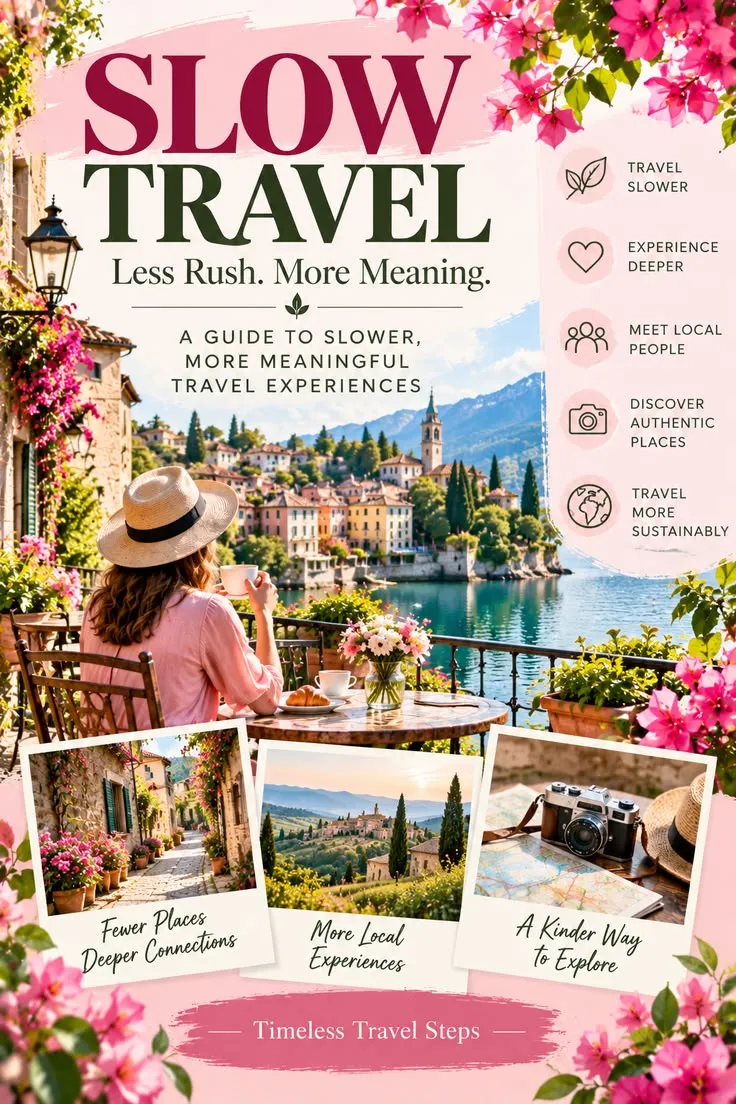
At its core, slow travel is about intentionality. Rather than changing hotels every few days or racing between cities, travelers settle into one destination—or a small cluster of nearby places—for an extended period. The emphasis shifts from covering ground to absorbing the rhythm of daily life: returning to the same café, discovering neighborhood markets, walking familiar streets without a map, and allowing unplanned moments to shape the experience.
This does not mean doing nothing. It means replacing rigid schedules with flexible ones, choosing local restaurants over tourist strips, and making space for activities that require time, such as cooking classes, craft workshops, language exchanges, or simply observing how a place functions beyond its most famous landmarks.
Why Travelers Are Embracing Longer Stays
Several factors converge to explain the rising appeal of slower, longer trips. Many people report burnout from high-intensity vacations that leave them more exhausted than restored. After years of compressed itineraries designed around maximum sightseeing, travelers are seeking holidays that feel restorative rather than demanding.
There is also a strong desire for authenticity and connection. Spending more time in one location allows visitors to move past surface-level tourism and notice the smaller details that give a place its character—the timing of local markets, the preferred gathering spots of residents, or the subtle shifts in atmosphere from morning to evening. This deeper immersion often leads to more memorable and personally meaningful experiences.
Practical considerations reinforce the trend. Longer stays frequently reduce daily costs. Accommodation providers commonly offer discounts for week-long or month-long bookings, and remaining in one place cuts transportation expenses between destinations. Access to a kitchen or laundry facilities in longer-stay lodging further lowers spending. At the same time, remote and flexible work arrangements have made extended trips more feasible for those who can blend professional responsibilities with travel.
Concern about overcrowding and the impact of tourism on local communities also plays a role. Many travelers express interest in supporting local businesses, choosing less saturated destinations or quieter neighborhoods, and traveling in ways that feel more responsible.
The Benefits of Slowing Down
The advantages of slow travel extend across several dimensions. Culturally, extended time in one place supports genuine engagement. Travelers may learn basic phrases, recognize regular faces, and participate in community events that a brief visit would miss. The result is often a richer understanding of daily life rather than a collection of postcard moments.
Mentally and emotionally, the slower pace supports rest and presence. Without the constant pressure of the next train, check-in, or attraction, people report greater capacity to relax, notice their surroundings, and enjoy spontaneous discoveries. These “magic” moments—an unexpected festival, a recommended trail, or hours spent in a neighborhood square—become possible when the schedule has room to breathe.
Financially, the model can be more sustainable. Fewer transfers and long-stay rates often stretch budgets further, while spending directed toward local businesses keeps more of the economic benefit within the community.
From a sustainability perspective, remaining in one area and relying more on walking, public transport, or regional trains typically reduces the carbon intensity of a trip compared with frequent short-haul flights between multiple cities.
How Slow Travel Looks in Practice
A slow travel trip might involve spending an entire week or more in a single city neighborhood, a small town, or a rural area. Travelers often choose walkable or compact destinations where daily exploration feels natural. Accommodation leans toward apartments, guesthouses, or small hotels that support a sense of living in a place rather than merely passing through.
Itineraries remain light. A few planned experiences—perhaps a market visit, a local class, or a day trip—leave ample open time. Meals become opportunities to explore regional cuisine at neighborhood spots. Evenings might involve returning to a favorite square or simply resting without the need to maximize every hour.
This style suits a wide range of travelers. Some use it for restorative breaks, others for deeper cultural immersion, and still others as a way to combine remote work with meaningful time abroad. Short breaks and multi-destination trips continue to serve different needs; slow travel simply expands the range of options available.
A Shift Toward Intention
The growth of slow travel reflects a broader reevaluation of what makes a trip successful. Satisfaction increasingly comes from how a place feels and how fully one engages with it, rather than from the number of destinations covered. Booking patterns and traveler surveys in 2026 show rising interest in longer stays, single-destination immersion, and experiences rooted in local culture and community benefit.
For many, the appeal lies in returning home with a sense of having truly inhabited a place for a while—having learned its rhythms, formed small connections, and allowed the experience to unfold at a human pace. In a world that often rewards speed and accumulation, choosing to stay longer and go deeper offers a different kind of richness. Slow travel does not reject exploration; it simply invites travelers to experience more by doing less, and to find greater meaning in the time they spend.
Read more – gloryhouseworld.com