
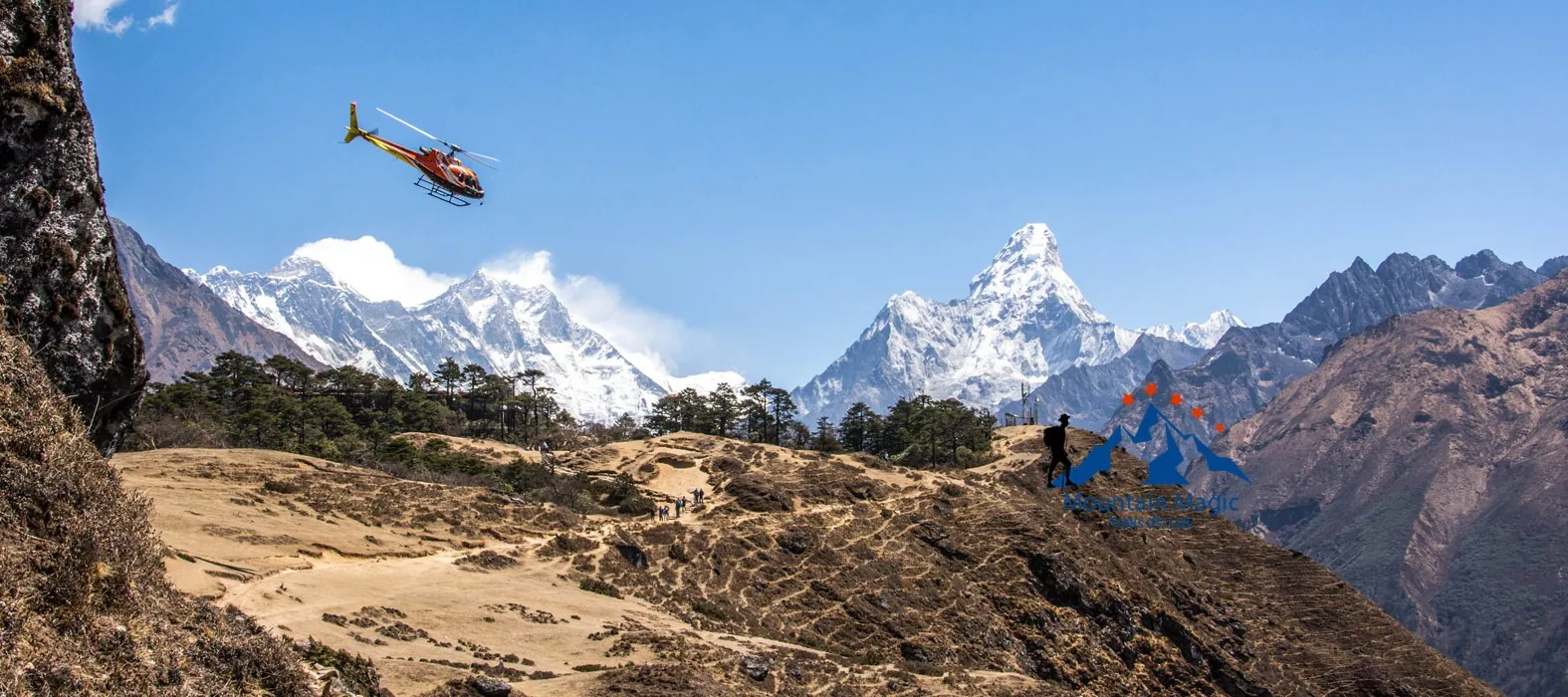
Many people dream of seeing Mount Everest, but the experience is about much more than one mountain.
The journey takes you through villages, forests, rivers, monasteries, rocky valleys, and high glaciers. Every part of the route offers something different.
The Everest Base Camp Trek With Helicopter Return combines this walking experience with a helicopter flight after reaching the high points of the journey. It allows travelers to explore the Khumbu on foot and then enjoy the mountains from above.
Lukla Is Where the Adventure Starts
The journey begins with a helicopter flight from Kathmandu to Lukla.
The change is quick. Kathmandu is busy and crowded, while Lukla feels like a small mountain settlement surrounded by hills.
Prepare for Your First Walking Day
After arriving in Lukla, the route continues toward Phakding.
The trail passes through green landscapes and follows sections of the Dudh Koshi River.
Do not worry about covering the trail quickly.
Your first day is a good time to check your walking pace and make sure your backpack feels comfortable.
Phakding Gives You a Gentle Introduction
Phakding is one of the early stops on the route.
The surroundings include small villages, mountain streams, suspension bridges, and forested slopes.
Notice the Local Way of Life
You may see porters carrying supplies or locals moving between settlements.
Stone houses and prayer flags are common sights.
These details are easy to overlook when you are focused only on Everest.
Take time to notice them.
They help you understand that the trail is also part of everyday life in the Khumbu.
Namche Is a Major Turning Point
The walk toward Namche Bazaar becomes more demanding.
The route includes several uphill sections before reaching the famous mountain town.
Use Your Rest Day Wisely
The itinerary includes an acclimatization day in Namche.
This gives your body time to adjust to the increasing altitude.
You can take a short hike, explore the village, or simply rest.
There is no need to spend the day trying to prove how fit you are.
A relaxed day can help you prepare for the higher sections.
Tengboche Adds a Cultural Experience
The route from Namche continues through forests and mountain paths toward Tengboche.
The village is famous for its Buddhist monastery and views of surrounding peaks.
Take a Break From the Walking Goal
If you visit the monastery, slow down.
Look at the prayer flags.
Notice the architecture.
Listen to the quiet surroundings.
The Everest region is home to a strong Sherpa culture, and learning about it makes the trek more meaningful.
Dingboche Changes the Pace
Dingboche sits at around 4,410 meters.
By this stage, the air is thinner and the landscape is more open.
Do Not Fight the Altitude
You may notice that your normal walking speed no longer feels comfortable.
That is expected.
Take shorter steps.
Rest when needed.
Keep drinking water.
The itinerary includes another acclimatization day at Dingboche, allowing travelers to adjust before climbing higher.
The Trail Becomes More Open
After Dingboche, trees become less common.
Rocky slopes, glaciers, and huge mountain walls become the main features around you.
Look Behind You
Do not only watch the trail ahead.
Turn around from time to time.
The valley behind you may show how far you have climbed.
The villages also begin to look smaller.
This is a simple way to appreciate the scale of the journey.
Lobuche Brings Everest Closer
Lobuche is one of the final major stops before Gorakshep.
At this point, the excitement can become stronger.
Keep Your Energy for the Important Day
Do not let excitement make you walk too quickly.
You still need energy for the route toward Everest Base Camp.
Eat properly.
Drink water.
Keep your pace steady.
A slow and controlled approach is better than becoming exhausted early.
Thukla Is a Place to Reflect
The route around Thukla includes memorials for climbers who died in the Everest region.
It is a quiet part of the journey.
Respect the Mountain
Everest is beautiful, but it is also a serious environment.
Altitude, cold, wind, and changing weather can create real challenges.
The memorials remind trekkers that preparation and good decisions matter.
Enjoy the scenery, but never underestimate the mountains.
Gorakshep Is High and Remote
Gorakshep sits at approximately 5,125 meters.
At this elevation, simple walking can feel much harder than expected.
Keep Your Pack Light
For the Base Camp walk, take only important items.
Your daypack can include:
-
Water
-
Snacks
-
Warm layers
-
Sunglasses
-
Sunscreen
-
Camera
-
Personal essentials
Extra weight is not useful on a long day at high altitude.
Walking Into Everest Base Camp
The listed elevation of Everest Base Camp is approximately 5,364 meters.
The trail from Gorakshep passes through a rocky landscape surrounded by glaciers and massive mountain peaks.
Enjoy the Achievement
When you reach Base Camp, do not immediately think about the next part.
Stop.
Take photographs.
Look around.
Remember where the journey started.
The contrast between Lukla’s green hills and the high glacier landscape makes the achievement even more impressive.
Kala Patthar Shows You the Bigger Picture
Kala Patthar reaches approximately 5,545 meters and is the highest point listed in the itinerary.
The viewpoint provides a wide view of Everest and several surrounding peaks.
Sunrise Brings the Mountains Alive
The early morning climb can be cold.
But the changing light makes the effort worthwhile.
As the sun rises, the peaks slowly become brighter.
Everest, Pumori, Lhotse, Nuptse, and the nearby glaciers create a huge Himalayan panorama.
This is one of the moments when it is worth simply standing still and looking.
The Helicopter Makes the Return Different
The Everest Base Camp Trek With Helicopter Return does not require travelers to walk the entire route back.
After completing the high-altitude sections, the return is made by helicopter.
See Familiar Places From Above
The aerial view can be surprising.
The trail that took hours to walk appears tiny.
Villages look like small dots.
Rivers become thin lines.
Mountain ridges seem to stretch endlessly.
You may recognize parts of the route you walked earlier.
The helicopter provides a final perspective that you cannot get from the trail.
Weather Can Change Your Plans
Mountain flights are affected by weather and visibility.
Clear conditions are important for safe helicopter operations.
Leave Extra Time
If you have another flight after reaching Kathmandu, avoid making the connection too close.
Give yourself some breathing room.
A flexible plan is much better than a schedule that depends on everything happening exactly on time.
What Makes This Trek Different?
The Everest Base Camp Trek With Helicopter Return combines two very different ways of experiencing the Himalayas.
Walking lets you experience the mountains slowly.
You notice villages, bridges, people, rivers, and changing landscapes.
The helicopter gives you a much wider view.
You can see how the valleys connect and how large the mountain region really is.
Neither experience replaces the other.
Together, they create a more complete journey.
The Journey Matters as Much as Base Camp
Reaching Everest Base Camp is the main goal for many travelers.
But the journey leading there is what gives that moment meaning.
You begin among green hills.
You cross rivers and suspension bridges.
You spend time in Namche.
You see the monastery at Tengboche.
You adjust to altitude in Dingboche.
You pass the memorials at Thukla.
You reach Lobuche and Gorakshep.
Then you finally arrive at Base Camp.
After Kala Patthar, the helicopter takes you above the same landscape you crossed on foot.
That is why the Everest Base Camp Trek With Helicopter Return feels like more than a trek to a famous destination.
It is a gradual journey through changing landscapes, cultures, and elevations, followed by one final look at the Himalayas from the sky.
FAQs
How high is Everest Base Camp?
Everest Base Camp is listed at approximately 5,364 meters.
What is the highest point of the journey?
Kala Patthar is approximately 5,545 meters.
Where are the acclimatization days?
The itinerary includes acclimatization days in Namche Bazaar and Dingboche.
Is Base Camp reached by walking?
Yes. The trek reaches Everest Base Camp on foot before the helicopter return.
Why choose a helicopter return?
It reduces the number of walking days on the return journey and provides an aerial view of the Everest region.
Can the helicopter schedule change?
Yes. Weather and visibility can affect helicopter operations, so keeping your travel plans flexible is recommended.